I’m not sure when people stopped asking. “How are you?” was never the deepest question—Seinfeld made a whole bit about how absurd it would be if someone actually answered “terrible.” But at least we used to ask. Somewhere between the pandemic, the political noise, and the general hum of everyone being overwhelmed, we stopped bothering to ask at all. A decade ago, we were at least reading the status updates of people we actually knew. Now we consume bit-sized TikToks, Reels, and Shorts from people we have never met.
I might have written it off as getting older, or just a rough patch in my own social life. But I kept hearing the voice of my sociology professor at Princeton, Mitchell Duneier. Last day of the semester, McCosh 50 lecture hall. He told us: when something is happening in your own life, before you assume it’s only happening to you, think about whether it could be a symptom of something happening to everyone.
So I looked around—and it wasn’t that shared spaces had disappeared. The coffee shops were still there. The parks, the waiting rooms, the neighborhood bars. But we had stopped actually engaging with the people in them. In Comuna 13 in Medellín, Colombia, rival gangs once divided the neighborhood with what locals call fronteras invisibles—invisible borders. A lamppost could be the dividing line. Cross it, and you were assumed hostile. We have built our own invisible borders, not with lampposts but with earbuds and algorithms, sorting ourselves into pockets of agreement so thoroughly that we have forgotten how to engage with anyone who differs from us, let alone celebrate them for their differences.
The sociologist Ray Oldenburg had a name for what these spaces are supposed to be: “third places”—the community centers, local parks, and neighborhood diners outside of home and work where people from different walks of life simply exist together. The places where “How are you?” still meant something, because you’d actually stick around for the answer.
You don’t need a sociology degree to see it. You just need to ask a New York City taxi driver.
The Contagion of Disconnection
Recently, during a cab ride through the city, my driver shared an observation from his 18 years behind the wheel. When he first started, the cab itself was a miniature third place. He loved talking with passengers; it was a sanctuary where the barriers between strangers naturally lowered. But as the smartphone era took hold, the spontaneous chatter died. Today, his passengers are almost universally glued to their screens.
Tragically, this isolation doesn’t end when the meter stops. The driver noted that this same behavior has infected our most intimate spaces. “What’s the point of doing dinner together,” he asked me, frustrated by his own children, “if you’re just going to be on your phones the whole time?”
If we cannot maintain a presence at the family dinner table, how can we expect to maintain the social fabric of a community?
We can look elsewhere to see what a functioning social fabric looks like. The same driver reminisced about a decade he spent living in Japan—his “golden days.” He marvelled at the izakayas, the vibrant, casual pubs that serve as cultural anchors where coworkers and neighbors gather to share food, drink, and conversation.
But that adult sense of community doesn’t happen by accident; it is a learned behavior. In Japan, children as young as preschool are taught osoji—the practice of cleaning their own classrooms and cafeterias. They learn early that they are responsible for their shared environment. In the West, we often treat community spaces as places of mere consumption. But the Japanese model reveals a profound truth: if you clean a space, you respect the space. And if you respect the space, you inherently respect the people who share it with you. Community is a muscle. If you don’t train it, it atrophies.
The Sanctuary of the Local Pool
I know this because I had to train that muscle myself. Growing up, I was a bundle of restless energy—a kid with ADHD who couldn’t quite sit still. When a move forced me into a new school in the sixth grade, I felt lost in the shuffle, awkward, and anxious. I craved a supportive circle, but I had nowhere to find it.
Then, I found the local community pool.
That summer, I spent every day from 7 AM to 9 PM in the water. The pool became my izakaya. It was a true third place where the barriers to entry were low, but the potential for connection was infinite. I found friends who splashed alongside me and mentors who pushed me. That community gave me the resilience to eventually become a four-time state gold medalist and a three-time Ivy League champion.
But the real victory wasn’t standing on the podium. It was the realization that a physical, shared space could entirely rewrite a kid’s trajectory.
The Anthem
But before the pool gave me a team, the school bus gave me an anthem.
I still remember my first time plugging into my new iPod mini in the middle of that school bus, rolling toward a new school where I knew nobody. On comes Good Charlotte’s “The Anthem” and I’m shouting in my head:
I DON’T EVER WANNA BE
YOOOOOOOOOU
DON’T WANNA BE JUST. LIKE. YOU.
WHAT I’M SAYIN’ IS
THIS IS THE ANTHEM
THROW ALL YOUR HANDS UP
Y’ALL GOT TO FEEL ME
SING IF YOU’RE WITH ME
I didn’t really understand the words I was saying when I pledged my allegiance to the flag of the United States of America. Blah blah blah something about a Republic. But individualism I could vibe with. Especially after five years of nobody wanting to trade me for my apples and whole wheat lunch sandwich. (Mom—I told you I wanted Gushers.)
That kid on the bus understood something instinctive: the desire to be distinctly yourself is as fundamental as the need to belong. The pool would teach me the belonging. The iPod had already taught me the defiance. Both mattered.
Then came the iPhone, then Facebook, then Instagram, then the three-camera iPhone, then screens in the air saying I was there too.
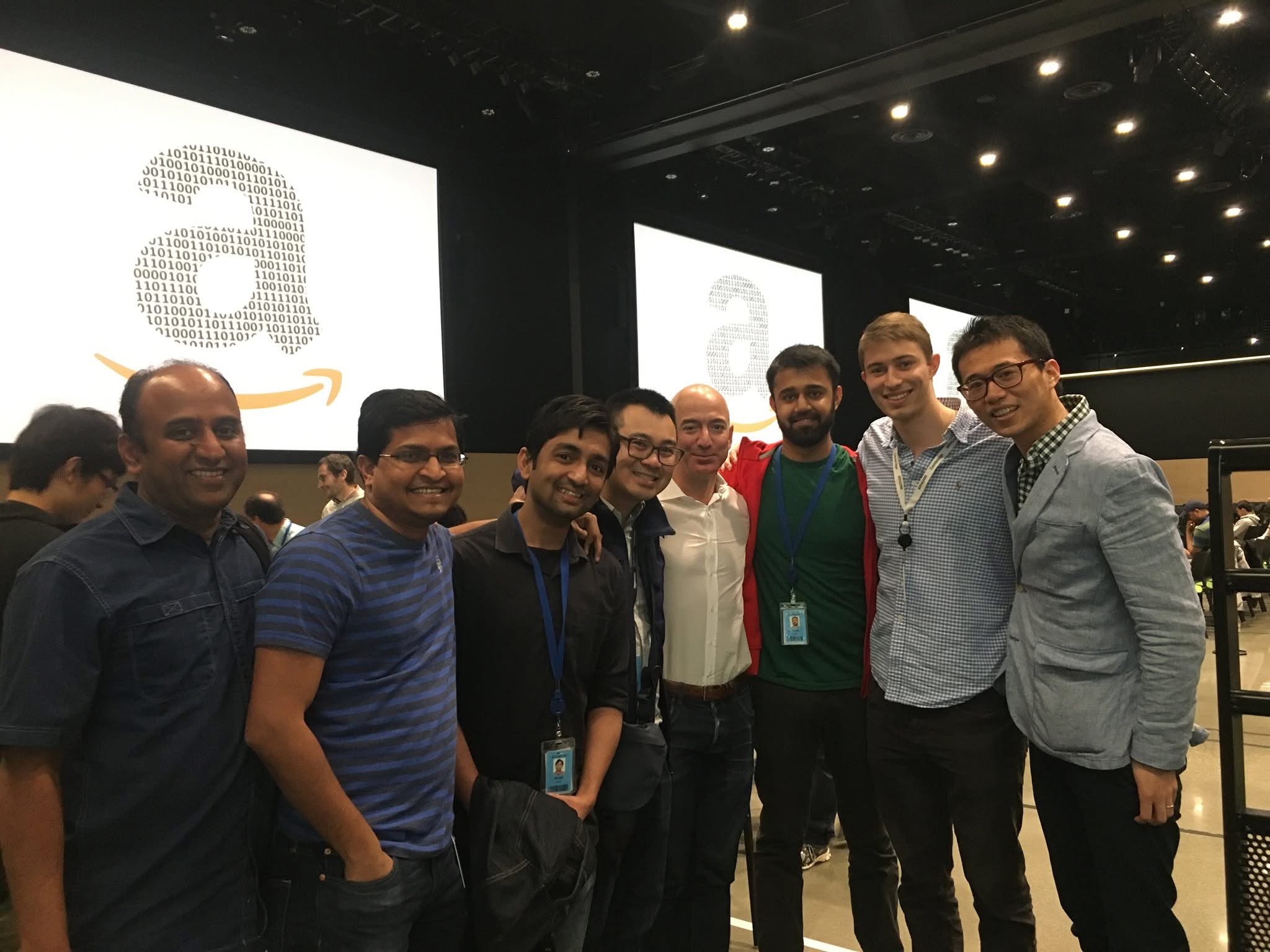
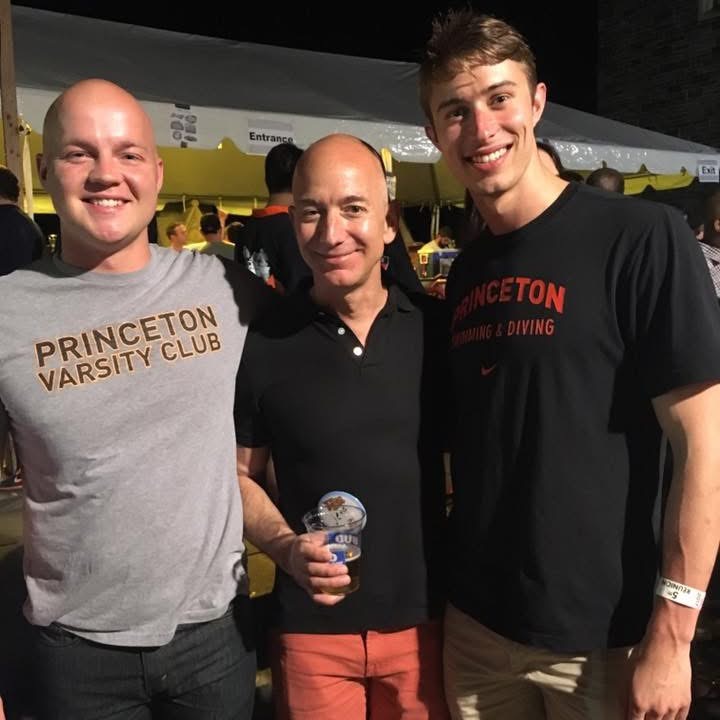
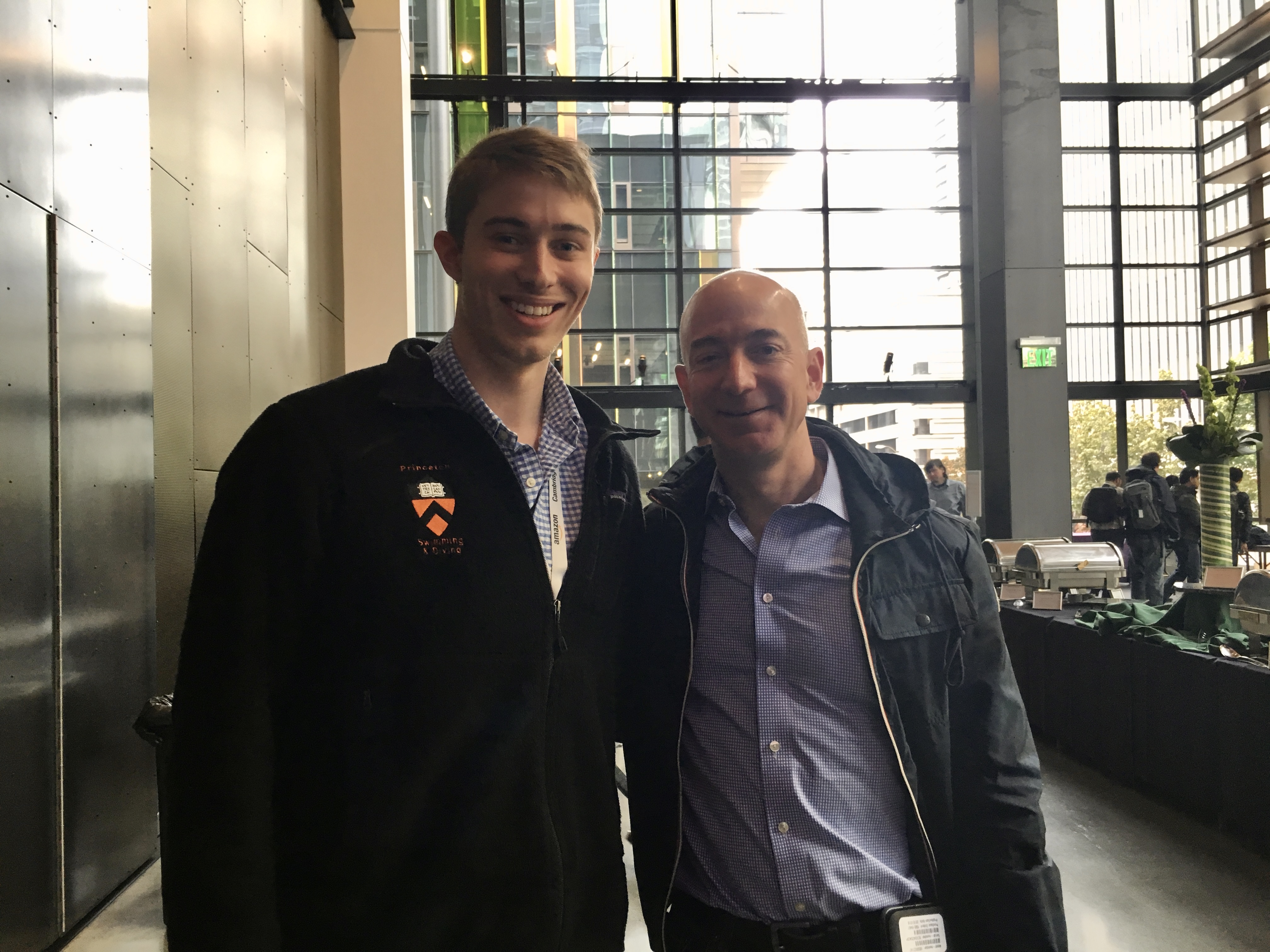
On April 14, 2021, I was pulling up some photos I’d posted of myself with Jeff Bezos to admire my likes on the ‘gram. As the story goes, he needed to pull aside this junior Software Development Engineer to ask how I wrote such excellent unit tests. I felt so important. Of course, unplugging from those photos, I had to do just a little scrolling on the infinite feed. And of course, the algorithm funneled me some sweet sweet digital grub to soften my mind and re-affirm me of my coolness. Slouched on my couch—pandemic home office, Amazon shares held tight like my rent depended on it—I listened through my Instagram Reels funnel as a ten-second compression of Jeff Bezos’s final Amazon shareholder letter played:
“Differentiation is Survival and the Universe Wants You to be Typical. If living things don’t work actively to prevent it, they eventually merge into their surroundings, and cease to exist as autonomous beings. The world pulls at you in an attempt to make you normal. You must work to maintain your distinctiveness.”
The richest man on Earth and a sixth-grader on a school bus agreed on one thing: I don’t wanna be you. But here is what neither Good Charlotte nor the shareholder letter told me: the algorithm I was consuming these words through was the universe’s most efficient tool for making me typical. Every scroll, every like, every ten-second compression was sorting me into a pocket of people who agreed with me—not to celebrate what made us unique, but to monetize our attention—grabbed by what agitates us, kept by what feels comfortingly the same.
The Japanese izakaya owner doesn’t ask how many followers you have. The community pool doesn’t rank you by likes. These third places have something that Instagram never will: they celebrate the individual within the collective. The swimmer with the weird stroke who shows up every morning. The regular at the bar who always orders the same thing. The neighbor who cleans up without being asked. In real community, your distinctiveness isn’t flattened—it is what makes you known.
That kid on the bus and the neighbor practicing osoji are not opposites. They are the same person—someone who, despite needing an anthem of their own, also needs a community to sing it with.
Aye aye, boss. Let’s fix it. THIS IS THE ANTHEM!!
Fixing It
Here is the troubling paradox: while we were building brilliant tools to connect data, we were building a society increasingly disconnected from itself. So I built Wake. Making a splash where “How are you?” meant the most—the pool—Wake uses AI to adapt to your body, your goals, your life as it actually is. Not a popularity contest. Not a one-size-fits-all plan. Your journey, understood on your terms.
But here is what makes it a social network rather than just another wellness app: on Instagram, you follow people—ones you already know, or ones the algorithm surfaced because they’re popular—and hope to find something in common. On Wake, you follow journeys, and discover people through them. The swimmers who know what a 5 AM practice feels like. The new parents navigating the fog of sleep deprivation. The retirees relearning what it means to take care of themselves. You find each other not because you were already friends or because someone went viral, but because you share experience and direction—a stronger foundation than any follow button has ever built.
The goal isn’t to build faster swimmers. It is to give people the physical and mental capacity to step away from their devices.
When we are exhausted, we retreat to our screens. When we have energy, we show up. We ask our neighbors how they are doing—and we stick around for the answer.